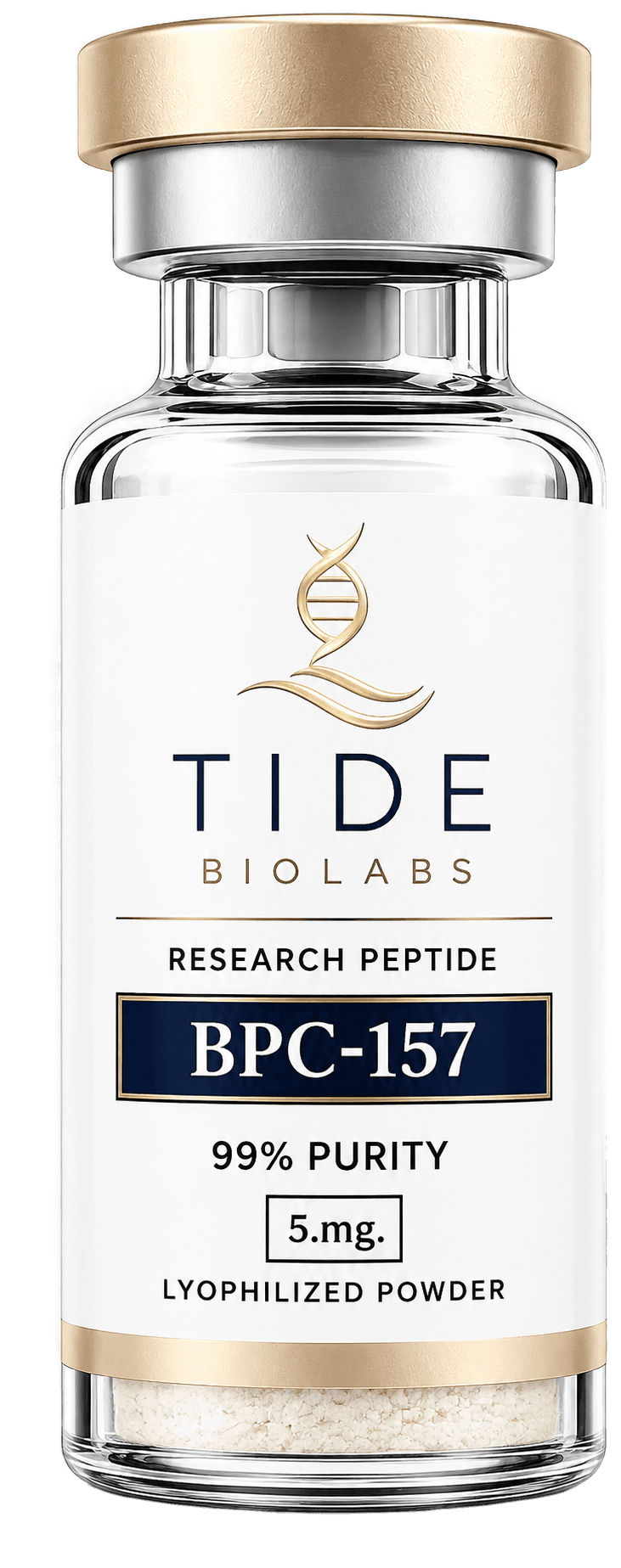
BPC-157 + TB-500
Body Protection Compound-157 / Thymosin Beta-4 fragment
A combined-vial formulation pairing two of the most widely studied recovery-associated peptide fragments, used in research examining systemic and local tissue repair together rather than as separate variables. BPC-157 is studied for stomach-protein-derived regenerative and gut-protective signaling; TB-500 is studied for its thymosin beta-4-derived actin-regulation and cell-migration activity — the pairing is examined for synergy between the two mechanisms.
What researchers are studying BPC-157 + TB-500 for.
Combined Tissue-Repair Signaling
Fracture-Healing Research
Anti-Inflammatory Activity
BPC-157: Gly-Glu-Pro-Pro-Pro-Gly-Lys-Pro-Ala-Asp-Asp-Ala-Gly-Leu-Val; TB-500: thymosin beta-4 fragment (full sequence via certificate of analysis)
Concentration and unit math, worked out.
Worked example for a 20mg vial reconstituted with 3mL of bacteriostatic water, drawn on a U-100 insulin syringe. Use the calculator below for any other vial size or water volume.
| UNITS DRAWN | VOLUME | DELIVERS |
|---|---|---|
| 5 units | 0.05 mL | 333 mcg |
| 10 units | 0.10 mL | 667 mcg |
| 20 units | 0.20 mL | 1333 mcg |
| 30 units | 0.30 mL | 2000 mcg |
| 50 units | 0.50 mL | 3333 mcg |
Run your own numbers.
Pre-filled with a 30-day starting point — one vial, dosed once daily for 30 days. Adjust any field to match your own protocol.
RESULTS
Educational reference tool only — not medical advice. Reconstitution and dosing decisions for any research protocol should be reviewed with a qualified professional. Figures assume uniform mixing and standard syringe calibration; always verify against your own protocol.